NCB จับมือ ASEAN-UK Economic Integration Programme ร่วมเสวนาเชิงนโยบายด้าน Alternative Data และระบบข้อมูลเครดิต ขับเคลื่อนการเข้าถึงทางการเงินอย่างยั่งยืนในอาเซียน
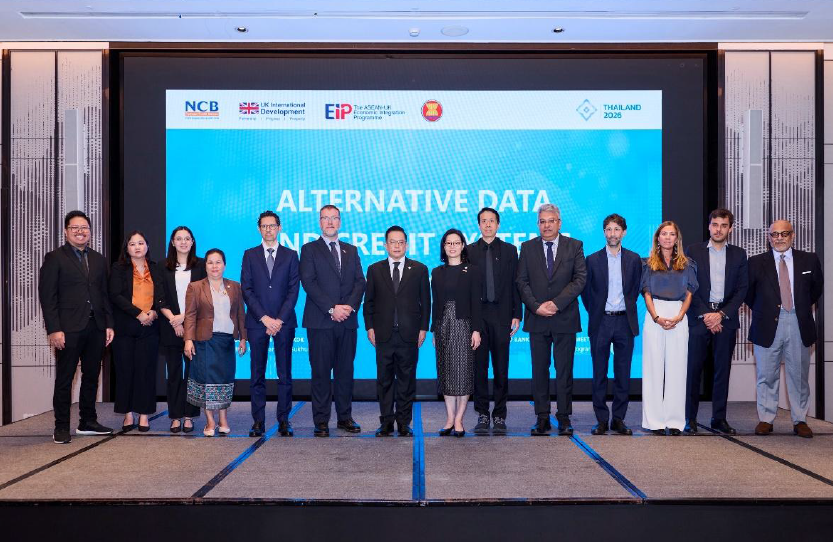
NCB และ ASEAN-UK Economic Integration Programme (EIP) ร่วมกันจัดการเสวนาเชิงนโยบายในหัวข้อ “Alternative Data and Credit Systems: A Policy Dialogue on Building Sustainable and Inclusive Financial Systems”
14 ตุลาคม 2569 : บริษัท ข้อมูลเครดิตแห่งชาติ จำกัด (NCB) และ ASEAN-UK Economic Integration Programme (EIP) ร่วมกันจัดการเสวนาเชิงนโยบายในหัวข้อ “Alternative Data and Credit Systems: A Policy Dialogue on Building Sustainable and Inclusive Financial Systems” โดยมีหน่วยงานภาครัฐและเครดิตบูโรในอาเซียน สถาบันการเงิน ผู้ให้บริการทางการเงินดิจิทัลเข้าร่วม ทั้งนี้ งานเสวนาดังกล่าวถือเป็นกิจกรรมที่เกี่ยวเนื่องกับการประชุม IMF-World Bank Group Annual Meetings 2026
ปัจจุบันนวัตกรรมด้านดิจิทัลมีความก้าวหน้าและเปลี่ยนแปลงอย่างรวดเร็ว ส่งผลให้ระบบนิเวศทางการเงินของประเทศ ต่าง ๆ เปลี่ยนแปลงไปอย่างรวดเร็วเช่นกัน เกิดมีแหล่งข้อมูลใหม่เพิ่มขึ้นอย่างต่อเนื่อง ทั้งจากการชำระเงินดิจิทัล อีคอมเมิร์ซ บริการฟินเทค และแพลตฟอร์มออนไลน์ ความท้าทายในปัจจุบันจึงอยู่ที่การรวมข้อมูลที่มีอยู่มากมายมาใช้มาใช้เชื่อมโยงกัน เพื่อเสริมความแข็งแกร่งให้ระบบข้อมูลเครดิต สนับสนุนการตัดสินใจด้านสินเชื่อบนพื้นฐานของข้อมูล และส่งเสริมการเข้า ถึงบริการทางการเงินอย่างทั่วถึงและยั่งยืน
ดร.วินิจ วิเศษสุวรรณภูมิ ผู้อำนวยการสำนักงานเศรษฐกิจการคลัง (สศค.) กล่าวว่า “การนำข้อมูลทางเลือก (Alternative Data) มาใช้จะช่วยเพิ่มมุมมองในการประเมินความน่าเชื่อถือของผู้กู้ให้มีความรอบด้านมากยิ่งขึ้น โดยเฉพาะกลุ่มผู้มีรายได้น้อย แรงงานนอกระบบ และ MSMEs ที่มีประวัติข้อมูลเครดิตจำกัด โดยข้อมูลจากการชำระเงินและธุรกรรมทางธุรกิจสามารถนำมาใช้ประกอบการประเมินศักยภาพและความสามารถในการชำระหนี้ และช่วยให้ผู้ให้บริการสินเชื่อสามารถประเมินและตัดสินใจให้สินเชื่อได้อย่างเหมาะสมและมีความรับผิดชอบ ปัจจุบันประเทศไทยอยู่ระหว่างการผลักดันการใช้ MOF Data Lake และ Ari Score เพื่อสนับสนุนการนำข้อมูลทางเลือกมาใช้ประกอบการประเมินความเสี่ยงด้านสินเชื่ออย่างมีประสิทธิภาพ ซึ่งจะช่วยเพิ่มโอกาสให้ประชาชนและภาคธุรกิจสามารถเข้าถึงสินเชื่อที่เหมาะสมและเข้าสู่ระบบการเงินได้มากขึ้น ภายใต้หลักความโปร่งใส การใช้ข้อมูลอย่างมีความรับผิดชอบ และสามารถตรวจสอบได้ เพื่อสร้างโอกาสในการเข้าถึงสินเชื่อในระบบให้กับประชาชนและภาคธุรกิจได้มากขึ้น”
ดร.ลัษมณ อรรถาพิช ผู้จัดการใหญ่ บริษัท ข้อมูลเครดิตแห่งชาติ จำกัด (NCB) กล่าวว่า “ในขณะที่ภูมิทัศน์ทางการเงินของประเทศต่าง ๆ ในอาเซียนกำลังเปลี่ยนแปลงอย่างต่อเนื่อง ระบบข้อมูลเครดิตจำเป็นต้องพัฒนาให้สอดคล้องกับพฤติกรรมทางเศรษฐกิจและแหล่งข้อมูลใหม่ ๆ ที่เกิดขึ้น การใช้ข้อมูลทางเลือก (Alternative Data) สามารถเข้ามาเสริมข้อมูลเครดิตที่ใช้อยู่ในปัจจุบัน และช่วยให้การประเมินคะแนนเครดิตให้มีความรอบด้านมากขึ้น โดยเฉพาะสำหรับ MSMEs และผู้ที่มีประวัติสินเชื่อจำกัด อย่างไรก็ตาม ในการนำข้อมูลเหล่านี้มาใช้ สิ่งสำคัญคือความน่าเชื่อถือของข้อมูลและการประมวลผลที่แม่นยำ NCB มุ่งสนับสนุนการใช้ข้อมูลอย่างมีความรับผิดชอบ เพื่อยกระดับการประเมินสินเชื่อ ขยายโอกาสในการเข้าถึงบริการทางการเงิน และร่วมสร้างระบบการเงินที่มีความมั่นคงในระยะยาว”
การสัมมนาในครั้งนี้มุ่งเน้นบทบาทของเศรษฐกิจดิจิทัลและการเข้าถึงบริการทางการเงิน ควบคู่กับการยกระดับมาตรฐานด้านการคุ้มครองผู้บริโภค การกำกับดูแลข้อมูล และความโปร่งใสของตลาด สำหรับ MSMEs จำนวนมาก ข้อมูลที่สะท้อนกิจกรรมและการดำเนินธุรกิจอาจยังมีไม่ครบถ้วนในระบบข้อมูลเครดิตแบบเดิม การนำ Alternative Data มาใช้อย่างเหมาะสม เช่น ข้อมูลการชำระเงิน กิจกรรมทางการค้า และข้อมูลจากแพลตฟอร์มต่าง ๆ จึงสามารถเข้ามาเสริมข้อมูลเครดิตในปัจจุบัน ซึ่งช่วยให้เห็นภาพความน่าเชื่อถือทางเครดิตได้รอบด้านมากยิ่งขึ้น
Francesco Strobbe, World Bank Group กล่าวว่า “Alternative Data สามารถช่วยขยายโอกาสในการเข้าถึงแหล่งเงินทุน โดยช่วยให้มองเห็นศักยภาพและข้อมูลของธุรกิจที่อาจถูกมองข้ามจากแนวทางการประเมินสินเชื่อแบบเดิม อย่างไรก็ตาม คุณค่าที่ยั่งยืนของ Alternative Data ขึ้นอยู่กับประสิทธิภาพในการนำข้อมูลดังกล่าวมาบูรณาการเข้ากับระบบข้อมูลเครดิตในภาพรวม ซึ่งจะช่วยสนับสนุนการให้สินเชื่ออย่างมีความรับผิดชอบ การคุ้มครองผู้บริโภค และเสถียรภาพของภาคการเงิน”
อีกหนึ่งประเด็นสำคัญจากการหารือคือการเปลี่ยนรูปแบบของปัญหา “ข้อมูลไม่เพียงพอ” ไปสู่ปัญหา “ข้อมูลกระจัดกระจาย” แม้ว่าข้อมูลที่ เกี่ยวข้องจะมีอยู่มากขึ้นในธนาคาร บริษัทข้อมูลเครดิต ระบบการชำระเงิน ผู้ให้บริการสินเชื่อดิจิทัล และแพลตฟอร์มต่าง ๆ แต่ข้อมูลเหล่านี้มักแยกอยู่ในแต่ละระบบ ทำให้การประเมินความน่าเชื่อถือด้านสินเชื่อของผู้กู้ ที่มีศักยภาพทำได้ไม่เต็มที่ ผู้เข้าร่วมจึงได้หารือถึงแนวทางการนำ Alternative Data มาเสริมกรอบข้อมูลเครดิตที่มีอยู่ เพื่อยกระดับการประเมินสินเชื่อ เพิ่มโอกาสในการเข้าถึงบริการทางการเงิน และเสริมความแข็งแกร่ง ให้ภาคการเงินสามารถ รับมือกับความเปลี่ยนแปลงได้ดีขึ้น
David Thomas รองหัวหน้าคณะ ผู้แทนสถานเอกอัครราชทูต อังกฤษประจำกรุงเทพฯ กล่าวว่า “Alternative Data สามารถเปิดโอกาสใหม่ ๆ ให้กับ MSMEs ได้ แต่เทคโนโลยีเพียงอย่างเดียวไม่เพียงพอ การสร้างผลลัพธ์ที่ยั่งยืน จำเป็นต้องมีระบบกำกับดูแลที่เข้มแข็ง ความเชื่อมั่นของผู้บริโภค และกรอบการกำกับดูแลที่พัฒนาไปพร้อมกับนวัตกรรม โดยคำนึงถึงบริบทของตลาดในแต่ละประเทศ”
EIP ในฐานะส่วนหนึ่งของการสนับสนุนการบูรณาการทางเศรษฐกิจและการเข้าถึงบริการทางการเงินในอาเซียนผ่านเสาหลักด้านบริการทางการเงิน สนับสนุนการวิจัยระดับภูมิภาคและการหารือเชิงนโยบายเกี่ยวกับ Alternative Data และการเข้าถึงแหล่งเงินทุนของ MSMEs โดย Katja Silva-Leander กรรมการผู้จัดการ Cadmus กล่าวว่า “Alternative Data มีศักยภาพในการเสริมความแข็งแกร่ง ให้ระบบนิเวศด้านสินเชื่อ และขยายการเข้าถึงแหล่งเงินทุนการนำ ประสบการณ์จากอาเซียน และนานาชาติมาแลกเปลี่ยนร่วมกันจะช่วยให้เกิดการศึกษาแนวทางที่นำไปใช้ได้จริง และมีความรับผิดชอบ ซึ่งตอบโจทย์ความต้องการและบริบทที่แตกต่างกันของประเทศต่าง ๆ ในภูมิภาค”
การเสวนาเน้นย้ำถึงความสำคัญของการเชื่อมโยงและทำงานร่วมกันระหว่างระบบ การกำกับดูแลข้อมูลที่เข้มแข็ง ความพร้อมด้านกฎระเบียบ และประสิทธิภาพในการกำกับดูแล เพื่อให้นวัตกรรมนำไปสู่ผลลัพธ์ด้านสินเชื่อที่ยั่งยืน ผู้เข้าร่วมได้แลกเปลี่ยนมุมมองว่า Alternative Data และข้อมูลเครดิตที่สามารถใช้ร่วมกันระหว่างระบบจะช่วยให้ MSMEs ไม่เพียงเข้าถึงแหล่งเงินทุนในระยะแรก แต่ยังสามารถสร้างประวัติทางการเงินที่นำไปใช้ต่อเนื่องได้ เพื่อสนับสนุนการเข้าถึง และมีส่วนร่วมในระบบการเงินอย่างเป็นทางการในระยะยาว
เกี่ยวกับบริษัท ข้อมูลเครดิตแห่งชาติ จำกัด (NCB)
บริษัท ข้อมูลเครดิตแห่งชาติ จำกัด (NCB) เป็นส่วนสำคัญของโครงสร้างพื้นฐานทางการเงินของประเทศไทย และมีบทบาทสำคัญในการสนับสนุนเสถียรภาพของระบบการเงิน โดยเป็นองค์กรหลักในการให้บริการข้อมูลเครดิตที่มีคุณภาพแก่สถาบันการเงิน สนับสนุนการแลกเปลี่ยนข้อมูลเครดิตและการให้สินเชื่ออย่างมีความรับผิดชอบ ซึ่งมีส่วนช่วยส่งเสริมเสถียรภาพของภาคการเงิน ความโปร่งใส และการเข้าถึงแหล่งเงินทุน ตลอดจนสนับสนุนการเติบโตอย่างยั่งยืนของเศรษฐกิจไทย
เกี่ยวกับโครงการ ASEAN-UK Economic Integration Programme (EIP)
EIP เป็นโครงการที่ได้รับการสนับสนุนจาก Foreign, Commonwealth & Development Office (FCDO) ร่วมกับสมาคม ประชาชาติแห่งเอเชียตะวันออกเฉียงใต้ (ASEAN) และดำเนินการโดย Cadmus Group และ Office for Product Safety and Standards (OPSS)
ข้อมูลเพิ่มเติมกรุณาติดต่อ
บริษัท ข้อมูลเครดิตแห่งชาติ จำกัด (NCB) ฝ่ายธุรกิจสัมพันธ์และภาพลักษณ์องค์กร
E-mail: [email protected]
National Credit Bureau of Thailand and ASEAN-UK Economic Integration Programme Convene Policy Dialogue on Alternative Data and Credit Systems to Advance Inclusive and Sustainable Finance in ASEAN
Bangkok, Thailand, 14 October 2026 – As ASEAN's digital economy continues to grow, alternative data is emerging as a promising tool to expand access to finance for businesses that remain underserved by traditional credit systems. To explore this opportunity, policymakers, regulators, Credit Bureaus in ASEAN, financial institutions, digital platforms and development partners from across ASEAN gathered today in Bangkok for the "Alternative Data and Credit Systems: A Policy Dialogue on Building Sustainable and Inclusive Financial Systems," jointly hosted by the National Credit Bureau (NCB) Thailand and the ASEAN-UK Economic Integration Programme (EIP), as an affiliated programme of the IMF-World Bank Group Annual Meetings 2026.
Digitalisation is reshaping ASEAN's economies as new sources of information are emerging through digital payments, e-commerce, fintech services and online platforms. These sources create opportunities to improve access to finance, particularly for micro, small and medium-sized enterprises (MSMEs). Lack of data is no longer the challenge, according to participants. It is about how information can be connected, trusted and used responsibly to strengthen credit systems, support informed lending decisions and advance sustainable financial inclusion.
“Alternative data can provide additional insights into borrowers’ creditworthiness. This is particularly relevant for low-income individuals, informal workers and MSMEs with limited credit histories. Payment records and business transaction data can complement existing credit information and give lenders a clearer picture of borrowers’ repayment capacity. This can support better-informed and more responsible lending decisions. Thailand is currently promoting the use of the MOF Data Lake and Ari Score to support alternative data use in credit risk assessment. These initiatives can help more individuals and businesses access suitable credit and participate in the formal financial system. This should be supported by transparency, responsible data use and appropriate safeguards to ensure that alternative data contributes to broader access to credit,” said Dr. Vinit Visessuvanapoom, Director-General of the Fiscal Policy Office, Ministry of Finance, Thailand
“As the financial landscape across ASEAN continues to evolve, credit information systems need to adapt to changing economic behaviours and the emergence of new data sources. Alternative data can complement existing credit information and support a more comprehensive approach to credit assessment, particularly for MSMEs and individuals with limited credit histories. However, as these new sources of data are increasingly incorporated into credit assessment, data reliability and the accuracy of data processing remain critical. NCB is committed to promoting the responsible use of data to enhance credit assessment, expand access to financial services, and contribute to a more resilient financial system over the long term,” said Dr. Luxmon Attapich, CEO of National Credit Bureau (NCB) Thailand.
The dialogue focused on a growing regional priority: ensuring that the benefits of digital transformation translate into broader access to finance, while upholding strong standards for consumer protection, data governance and market integrity. For many MSMEs, valuable economic activity remains only partially reflected in in conventional credit reporting systems. When used responsibly, alternative data, including payment records, merchant activity and platform-based information, can complement traditional credit information by providing a more complete picture of creditworthiness.
“Alternative data can help expand access to finance by improving the visibility of businesses, particularly MSMEs, that may be overlooked by conventional assessment approaches. Its long-term value, however, depends on how effectively it is integrated into broader credit information systems that support responsible lending, consumer protection, and financial sector stability,” said Francesco Strobbe, World Bank Group.
A key theme of the discussions was the shift from data scarcity to data fragmentation. While relevant information increasingly exists across banks, credit bureaus, payment systems, digital lenders and platform ecosystems, it often remains siloed, limiting credit visibility for otherwise viable borrowers. Participants therefore explored how alternative data can complement established credit information frameworks, enabling stronger credit assessment, greater financial inclusion and enhanced financial-sector resilience.
“Alternative data can help unlock new opportunities for MSMEs, but technology alone is not enough. Lasting impact requires strong governance, consumer trust and regulatory frameworks that evolve alongside innovation while reflecting local market conditions,” said David Thomas, Deputy Head of Mission, British Embassy Bangkok.
As part of its support for ASEAN economic integration and financial inclusion, the EIP through the Financial Services Pillar is supporting regional research and policy dialogue on alternative data and MSME finance. “Alternative data has the potential to strengthen credit ecosystems and expand access to finance. By bringing together ASEAN and international experience, we hope that this initiative allows the exploration of practical and responsible approaches that respond to the different needs and circumstances of countries across the region,” said Katja Silva-Leander, Managing Director of Cadmus.
Discussions highlighted the importance of interoperability, strong data governance, regulatory readiness and supervisory visibility in ensuring that innovation translates into sustainable credit outcomes. Participants explored how alternative data and shared credit information can help MSMEs not only gain initial access to finance but also build portable financial histories that support long-term participation in the formal financial system.
By bringing together diverse stakeholders from across the financial ecosystem, the Policy Dialogue reinforces a shared commitment to harnessing innovation to expand access to finance while strengthening credit systems, market resilience and consumer trust. As ASEAN’s digital economy grows, strong credit information systems will be critical to helping businesses and consumers participate fully and responsibly in the region's economic growth.
About the National Credit Bureau (NCB) Thailand
National Credit Bureau Co., Ltd. (NCB) is an integral part of Thailand’s financial infrastructure and plays a key role in supporting the stability of the financial system. As a key provider of quality credit information to financial institutions, NCB supports credit information sharing and responsible lending practices, contributing to financial sector stability, transparency and access to finance, while supporting the sustainable growth of Thailand’s economy.
About the ASEAN-UK Economic Integration Programme (EIP)
EIP is a programme supported by the Foreign, Commonwealth & Development Office (FCDO) in partnership with the Association of Southeast Asian Nations (ASEAN), implemented by Cadmus Group and the Office for Product Safety and Standards (OPSS).