PM’s field visit in Chiang Mai to follow up on wildfire and haze situations
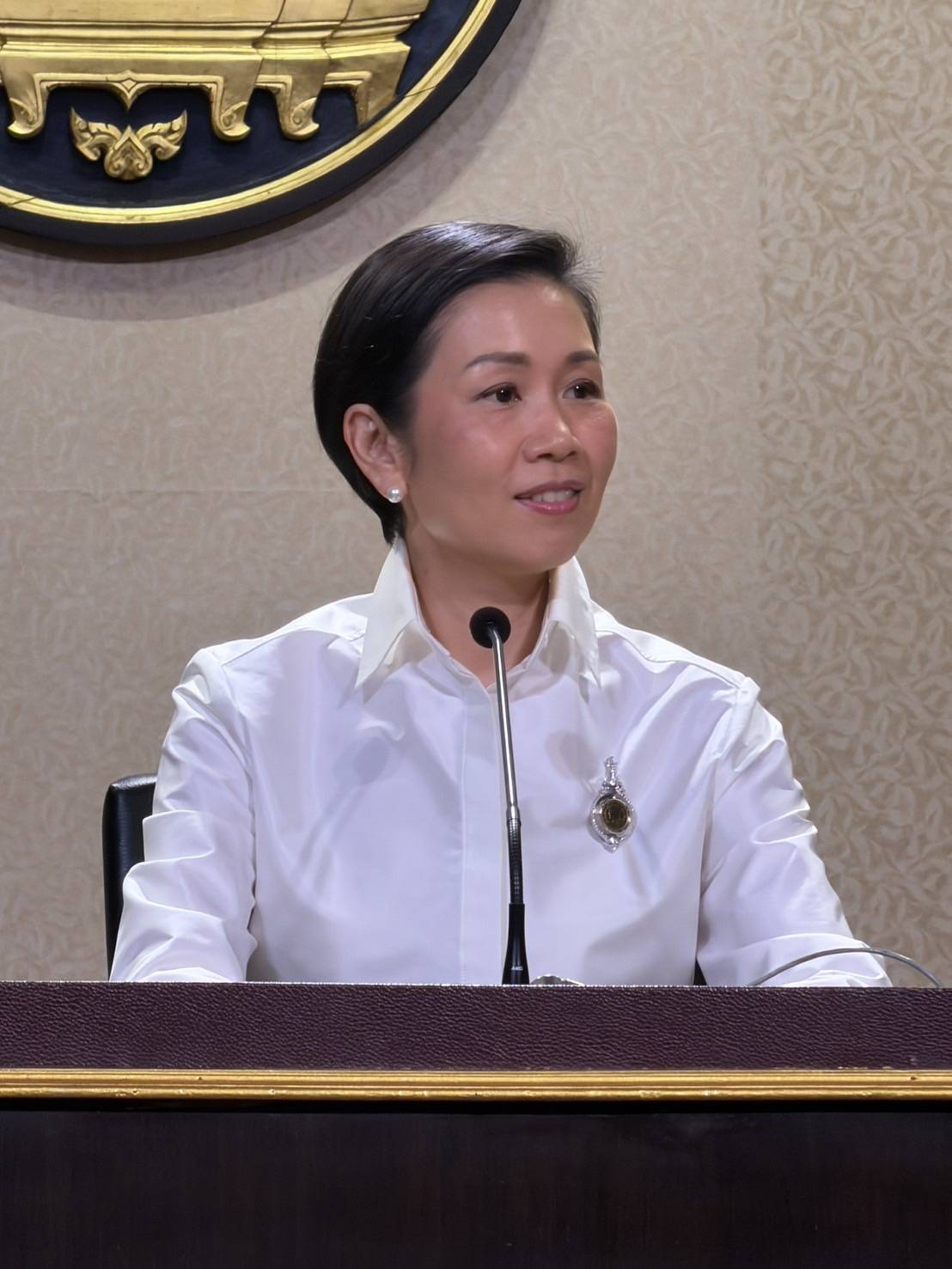
Government Spokesperson Rachada Dhnadirek disclosed that on April 20, 2026, Prime Minister and Minister of Interior Anutin Charnvirakul paid a field visit to Chiang Mai where he chaired a meeting and was taken to the field to closely follow up on wildfire and haze situation.
This field visit was aimed at following up and systematically addressing wildfire, PM2.5 particulates, and drought, while also determining additional measures and expediting law enforcement to ensure comprehensive protection for the people. At the meeting, the Prime Minister ordered that management be carried out under a “Single Command” system, fully authorizing provincial governors as commanders in their respective areas. A War room must be established, and the public must be encouraged to offer suggestions and solutions to the problems.
The Prime Minister also emphasized the need for all agencies to closely integrate their work to ensure that targeted solutions have been reached. There must be active information-sharing and full leveraging of each agency’s capacity. The Government stands ready to provide full support in terms of budget, personnel, and resources to urgently ease the situation, particularly in the 8 upper Northern provinces.
With regard to the overall picture of wildfire and haze, more than 500,000 hotspots have been detected in the neighboring countries. In Thailand, most hotspots, at approx. 40,989 spots, are found in forest areas. The next largest locations detected are agricultural land, especially cornfields and rotational farming areas (2,951 spots), followed by other agricultural areas with 2,109 spots.
The Government has carried out proactive measures in parallel, i.e., implementation of campaigns to minimize burning in agricultural areas, promotion of organic fertilizer production, and capacity-building for farmers, as well as encouraging continuous community participation. These efforts have led to improvements in certain provinces. In Chiang Mai, for instance, the number of hotspots has significantly dropped from tens of thousands to only 26 points in agricultural areas and 225 points in Sor Por Kor land.
Nonetheless, it was found that approx. 30-40% of PM2.5 particulates originate from transboundary pollution. In addressing this external factor, the Government has leveraged both ASEAN-level cooperation mechanisms and domestic measures, particularly controlling the import of animal feed corn that is not certified as free from burning. This measure has been implemented by Ministry of Commerce since January 1, 2026, and saw the result of 70% reduction in corn imports, reflecting both policy strictness and adaptation of importers.
According to the Prime Minister, this year’s weather has been drier than usual, making forest fires more likely. An El Niño phenomenon is expected around mid-year, which could result in the below-average of rainfall. The Government has, therefore, ordered intensive water management. Drought-risk areas must be identified in advance, and water storage in dams and reservoirs must be increased. At present, no areas are reported on water shortages. After April 21, weather conditions are expected to become more favorable for artificial rainmaking, as humidity level rises. This will help alleviate haze and PM 2.5 pollution in the coming period.